

Part of What Your Website Should Say, the guide this sits under.
That’s what we’re talking about today. Focusing on that 2% who are going to buy from you. And helping you answer the question “how do I pick just one target customer?”
Instead of trying to capture every set of eyes that see your business, I want you to go after just one person. That individual is your target customer.
Understanding that person can have a tremendous impact on your organization. Including:
- Discovering new ways to innovate
- Less time on bad marketing investments
- Just…a little more empathy in business
Working with Hemsly
One of my favorite recent clients is the successful online retailer of faux garden pieces, Hemsly.com. When we started our work together, we identified Cat as their target customer.

Cat is a 34-year-old housewife and mom who loves decorating her home with fun, trendy items she finds on Instagram.
As our work progressed, however, we uncovered a different target customer: Leah, a 42-year-old design director for a fast-growing interior design firm in Denver. Leah is responsible for seeking out and establishing new vendor partnerships crucial to her firm’s success and reputation.
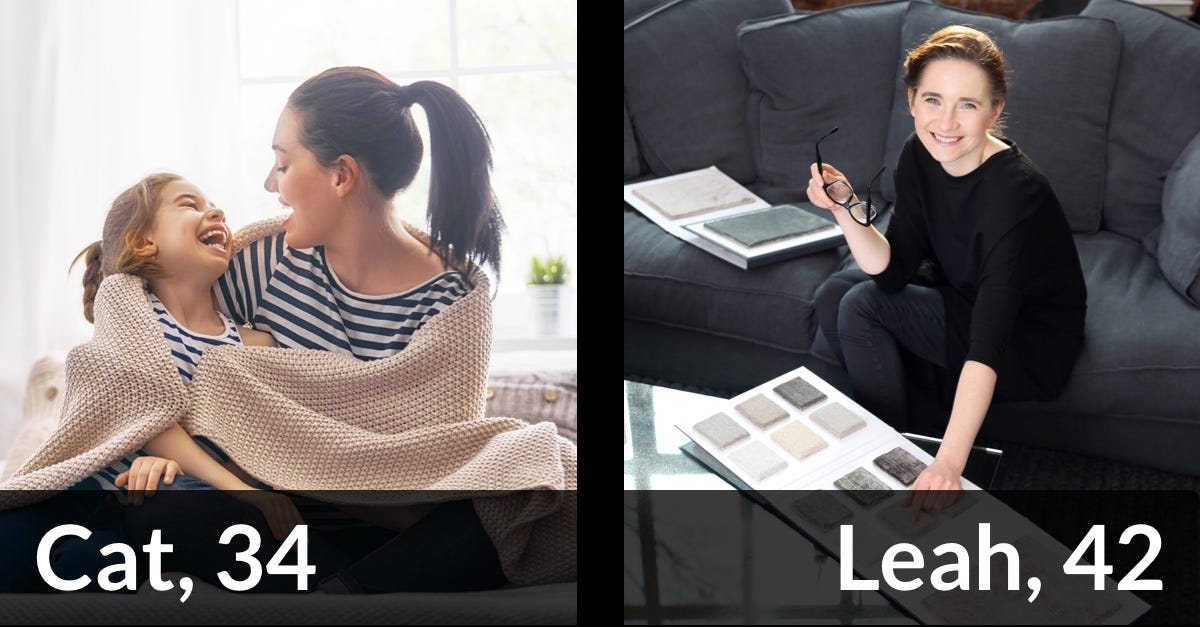
Does it really make that much of a difference whether your target customer is Cat or Leah? Let’s take a look six factors that underscore just how important it is to get specific about your target customer.
1) Look at how much it costs to acquire your target customer.
The upfront cost in terms of both capital and time to acquire a casual Instagram shopper like Cat might be less than you’ll spend to win Leah, but the return on investment with Leah is far greater.
As we’ll see, Leah’s overall value to Hemsly is far greater than Cat’s, making the cost to win her business a more strategic investment.
2) Figure out which target customer will spend the most with you per transaction.
Market research shows us that Cat will likely spend less per visit than Leah, an interior designer who is decorating entire model homes all at once. Whereas Cat will probably spend $100 or less, Leah will be more likely to go over $1,000 per transaction.
Suddenly there is a very real difference in the value between our target customer candidates.
3) Decide which target customer provides you the highest lifetime value.
We already know that it is more cost efficient to keep the customers you already have rather than paying to seek out new ones. While both Leah and Cat will become return customers, their lifetime value as customers is far different.
Looking at their projected spending habits, we can see why targeting our marketing toward Leah will bring us more efficient gains over trying to cast a wider net.

4) Pick the target customer with the best referral network.
Even if Hemsly becomes one of Cat’s favorite places to shop for her home, her group of friends will likely share the same spending habits as Cat herself.
Leah, on the other hand, has a network of designers she works with, making her individual referrals far more valuable to Hemsly.
Because your relationship with Leah grants you some access to her network, you automatically decrease the cost of acquisition for future customers.
5) Find the target customer who will benefit most from your products and services.
In order to foster a lasting relationship with your target customer, your product needs to be of actual material benefit to them in some way. They need to get what they pay for, and maybe a little more.
Beyond their quality products, Hemsly offers Leah a one-stop shop for many of her decorating needs. The convenience of shopping with Hemsly becomes part of Leah’s product experience, and adds value to her relationship with the brand.
6) Choose someone you enjoy working with
When defining your target customer, imagine the kind of person you would enjoy working with.
Flesh out their personality, how they communicate, their interests and pet peeves. Get really specific! This way, you’ll be more likely to attract customers you’ll like interacting with.
Do I have to pick just one?
Yes! Once you pick your target customer, there’s a lot to do: define this customer’s journey with your brand, write targeted emails and followups, figure out how to solicit referrals, and so much more.
Once you’ve gone through these items for one person you can move on to defining new customers.
I hope this process helps you understand more about the person you are trying to work with.
I believe incredible things can happen in our world when businesses have more empathy for their customers and their employees. And it starts…it starts with small acts. Like taking the time to define the human behind your marketing efforts.
Common questions
Why should I target only one customer
Because writing for everyone produces language specific to no one. Naming one person lets you use their words, which is what makes a stranger recognise themselves on your page.
Will I lose business by narrowing my target
Usually the opposite. A narrow message is easier to recognise and refer. Broad messaging does not attract more people, it just fails to attract anyone in particular.
How do I choose which customer to target
Look at who already buys most readily, closes fastest, and refers you. That is usually your one target customer, not the largest theoretical market.